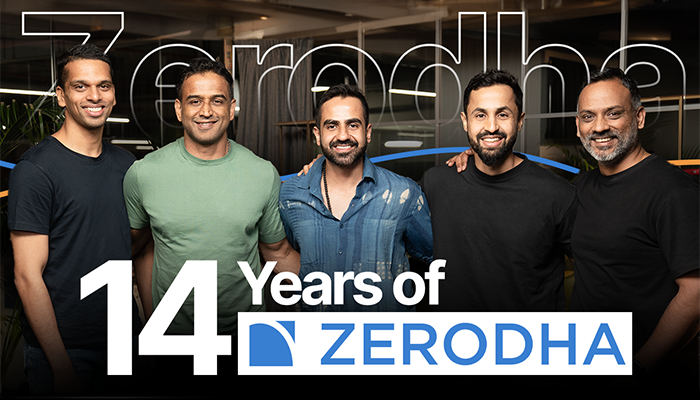
In the world of Indian fintech, Zerodha case study stands out as a revolutionary example of how a bootstrapped startup disrupted an established industry. Founded in 2010, Zerodha challenged legacy brokerage models by offering zero brokerage on delivery trades, a flat-fee pricing model, and an easy-to-use platform—quickly rising to become India’s largest stockbroker with over 12 million clients by 2024.
Company Overview
- Name: Zerodha Broking Ltd.
- Founded: 2010
- Founder(s): Nithin Kamath, Nikhil Kamath
- Headquarters: Bangalore, India
- Industry: Fintech, Stock Brokerage
- Website: zerodha.com
About Zerodha:
Zerodha is a discount brokerage firm in India known for democratizing access to stock markets by removing high commission barriers on delivery trades, f&o trading. IT offers a variety of services like stock investment and trading,currencies and commodity trading , mutual fund investment, bond investments. Zerodha contributes more than 15% of daily retail volumes across all Indian Stock Exchanges.
Unlike legacy firms like ICICI Direct or Sharekhan, which charged high commissions, Zerodha offered zero brokerage on equity delivery trades and a flat ₹20 fee on intraday and F&O trades—disrupting the entire brokerage pricing model.
Problem Faced by indian investors Before Zerodha:
Before Zerodha, investing in the stock market was:
- Expensive – Brokerage firms charged percentage-based fees which is higher than zerodha.
- Complex – Platforms were slow, unintuitive, and outdated.
- Limited – Only affluent investors or institutions could afford regular trading.
There was a major trust gap and accessibility issue for first-time investors. Nithin Kamath, a self-taught trader, saw these inefficiencies firsthand and decided to build a solution by traders, for traders.
Strategy: How Zerodha Disrupted the Market?
How Zerodha executed its growth strategy without raising external funding:
1. Innovative Pricing Model
- Zero brokerage on delivery trades attracted retail investors.
- Flat ₹20/order for intraday/F&O was revolutionary.
- Cost transparency built massive trust among users.
2. Bootstrapped Growth
- The company grew without any venture capital funding.
- Profits were reinvested into tech, products, and people.
- This allowed full control over decisions and culture.
3. User-Centric Technology
- Built Kite, a slick, fast, and user-friendly trading platform.
- Developed Coin for direct mutual fund investing.
- Created Console, a powerful back-office analytics dashboard.
4. Content & Education
- Launched Varsity, one of the most comprehensive free stock market learning platforms.
- Used blog posts, YouTube, and webinars to educate users and build community.
5. Word-of-Mouth Marketing
- Focused on solving user problems, not advertising heavily.
- User satisfaction led to massive word-of-mouth referrals.
- Social media engagement with transparency enhanced trust.
6. APIs for Developers
- Opened APIs for developers to build on Zerodha’s infrastructure.
- This allowed fintech startups to integrate and build apps, expanding Zerodha’s ecosystem.
Results: From Underdog to Market Leader
Zerodha’s lean and transparent business model delivered explosive results:
| Metric | Value |
| Active Clients (2024) | 12+ Million |
| Daily Transactions | 6+ Million |
| Revenue (FY 2023-24) | ₹6,875 Crores |
| Net Profit | ₹2,907 Crores |
| Employees | ~1,800 |
| Funding | ₹0 (fully bootstrapped) |
Zerodha’s success was not just about numbers. It reshaped India’s stock market landscape, empowering millions of young investors.
Vision And Mission:
The upcoming vision of zerodha is to add 5 to 10 million new investors to Indian Stock Market with full transparency and low cost charges on investment and trading. Nithin Concluded that “India is very dependent on foreign capital to drive the country. For any country to do well, you need residents to put their money in the market. The money shouldn’t just stay in fixed deposits and real estate. I want to encourage people to educate themselves and put the money in the ecosystem in some way or the other to drive growth”
Challenges Zerodha Still Faces
No business is perfect. Zerodha has its own set of issues:
- Customer Support Scalability – Complaints rise during market volatility.
- Limited Features Compared to Full-Service Brokers – No personalized advisory services.
- Growing Competition – New players like Upstox, Groww, and Dhan are aggressively innovating.
But Zerodha’s continued focus on innovation, transparency, and user satisfaction keeps it ahead of the curve.
Key Takeaways from Zerodha’s Business Model
This business case study of Zerodha teaches us multiple lessons:
1. Solve a Real Problem
Zerodha eliminated the pain point of high brokerage fees and poor UI/UX in trading platforms.
2. Bootstrapping Works—If You Build Value
You don’t always need VC funding to scale. Zerodha grew on product strength and community trust.
3. Education is a Growth Strategy
By offering free financial education through Varsity, they attracted and retained millions of first-time investors.
4. Tech is the Ultimate Enabler
Zerodha’s platforms like Kite, Coin, and Console are best-in-class, setting a high bar in fintech UX.
5. Trust and Transparency > Advertising
Instead of paid ads, they focused on delivering honest communication and a no-BS brand image.
Founder’s Quote
“We never set out to make money. We just wanted to build something that would help people like us trade better.”
— Nithin Kamath, Co-Founder & CEO, Zerodha
This quote reflects the value-first mindset that fueled Zerodha’s explosive growth.
Zerodha’s story is one of India’s most inspiring startup case studies. It teaches us that solving real problems with empathy and innovation can lead to industry-changing impact—even without external funding. As the No. 1 brokerage firm in India, Zerodha’s business case study will continue to inspire new-age entrepreneurs, fintech developers, and retail investors alike.
Whether you’re building a tech product or just entering the stock market, there’s something to learn from Zerodha’s lean, transparent, and value-first approach.
- What inspired you most about Zerodha’s journey? Drop your thoughts in the comments below.
- Want more startup case studies like this? Bookmark our blog and subscribe for updates.
Disclaimer:
This case study is for educational and informational purposes only. It is based on publicly available data and does not represent official communication from Zerodha or its affiliates. Readers are advised to conduct their own research before making any financial or business decisions.