


An Indian naval officer on honeymoon, a tourist guide who was sole breadwinner for his family, and a businessman holidaying with his wife and children were among the victims of the horrific Pahalgam Attack that killed 26 people in Indian-administered Kashmir.On april 22, 2025, around 2:30 IST seven militants disguised in military uniforms emerged from the surrounding forests and opened fire on tourists in the serene Baisaran Valley near Pahalgam in Jammu and Kashmir, a popular destination known for its scenic beauty.
Eyewitnesses reported that the attackers used M4 carbines and AK-47 rifles and fired around 70 rounds killing 28 civilians, including 24 Indian tourists from states such as Karnataka, Kerala, Maharashtra, Odisha, Gujarat, Haryana, West Bengal, and Uttar Pradesh. Two locals from Jammu and Kashmir and two foreign tourists from Nepal and the United Arab Emirates were also among the deceased. Notably, the victims included a 26-year-old Indian Navy officer and an Intelligence Bureau official.The attackers reportedly targeted non-Muslim tourists (mostly Hindu), asking individuals to recite Islamic verses to identify their religion before shooting .
Amidst the chaos, local Kashmiri Shia Muslim Syed Adil Hussain Shah attempted to shield the tourists and wrestled with one of the attackers but was tragically killed in the effort.Over 20 individuals sustained injuries and were transported to nearby medical facilities, with some airlifted to a military hospital in Srinagar for advanced treatment.
 The Resistance Front (TRF), an affiliate of Pakistan-based Lashkar-e-Taiba and Hizbul Mujahideen, claimed responsibility for the attack.The group cited opposition to demographic changes in the region following the revocation of Jammu and Kashmir’s special status in 2019, which they argue has led to the settlement of over 85,000 outsiders . Preliminary investigations by Indian security agencies suggest that the attack was orchestrated by seven militants, including four to five individuals from Pakistan. Sketches of three suspects have been released, and Saifullah Kasuri, also known as Khalid, a top Lashkar-e-Taiba commander, has been identified as the mastermind behind the attack.
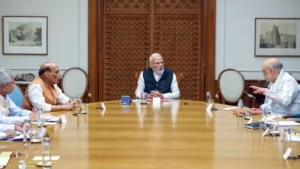
In the wake of the attack, Prime Minister Narendra Modi cut short his visit to Saudi Arabia and vowed to bring the perpetrators to justice, emphasizing India’s unwavering stance against terrorism. Union Home Minister Amit Shah traveled to Srinagar to assess the situation and coordinate the security response. Additionally, Finance Minister Nirmala Sitharaman curtailed her official visit to the United States and Peru to return to India.
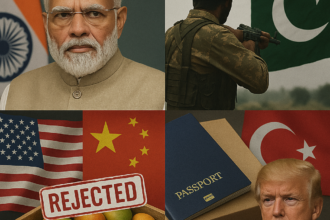
India’s several strong response against Pakistan ahead of the attack-
- Indus water treaty suspended
- Closure of Attari-Wagah Border
- Ban on Pakistani Nationals entering India and pakistani Nationals to leave India within 48 hours
- Expulsion of Military Advisors
- Reduction of High Commission Staff strength
The international community has widely condemned the attack. U.S. President Donald Trump, U.K. Prime Minister Rishi Sunak, and leaders from China and Singapore expressed their condolences and support for India. The Supreme Court of India also issued a statement denouncing the attack as a “diabolical act of mindless violence”. Despite these condemnations, Pakistan’s Defense Minister Khawaja Asif denied any involvement, attributing the attack to “homegrown terrorists” and asserting that Pakistan had no role in the incident.
The attack has dealt a severe blow to the local tourism industry, a vital component of Jammu and Kashmir’s economy. Many tourists have canceled their trips, and those present during the attack have reported exorbitant airfare prices when attempting to leave the region . The fear and uncertainty have led to a significant decline in tourist arrivals, affecting the livelihoods of many residents dependent on tourism.
Disclaimer
The information provided in this blog post has been compiled from various reputable news outlets and public sources available online, including The Guardian, The Times, wikipedia , and others. While every effort has been made to ensure the accuracy of the details, the content may reflect the reports as published at the time and is subject to updates. Readers are encouraged to refer to official sources and news platforms for the most current and verified information. The intention of this blog is purely informational and not to promote or incite any political or religious viewpoints.





One Comment